
Marketing Automation – An application to drive business breakthroughs
Reading time: 6 minutes
With the rapid development of technology and artificial intelligence, marketing is also among the industries positively affected by this wave. The concept of automation is no longer limited to sophisticated machines that reduce human effort, but is also known in Marketing Automation .

Vietnam’s leading AI-powered multi-channel virtual call center.
What is Marketing Automation?
Marketing automation is the process of automating marketing activities using software. The technology used in this software allows marketers to automatically implement various repetitive marketing tasks, including email marketing, social media marketing, or advertising campaigns.
With marketing automation, businesses can send customers automated messages based on a pre-set sequence of conditions, also known as a workflow. This reduces human involvement in repetitive tasks and minimizes errors that are difficult for humans to control.
Applications of Marketing Automation
When talking about marketing automation workflows, we often think of email marketing workflows. Many people mistakenly believe that email marketing and marketing automation are the same. However, these two concepts are completely different. They are a combination that helps optimize marketing effectiveness.
In email marketing, if you only use the basic features of Gmail, such as the ability to send emails to many people at once, then with Marketing Automation, you can send emails to many people simultaneously while tracking their reactions and actions to your emails. Marketing Automation provides many functions and tools to help you improve the effectiveness of your email marketing.
In addition to email marketing, Marketing Automation is also involved in the following activities:
- Social media marketing: Automatically schedule posts at specific times on various social media platforms.
- Monitor and analyze data from websites, blogs, banner ads, etc.
- Lead nurturing and generation: Analyze leads and choose the most effective strategies to nurture them.
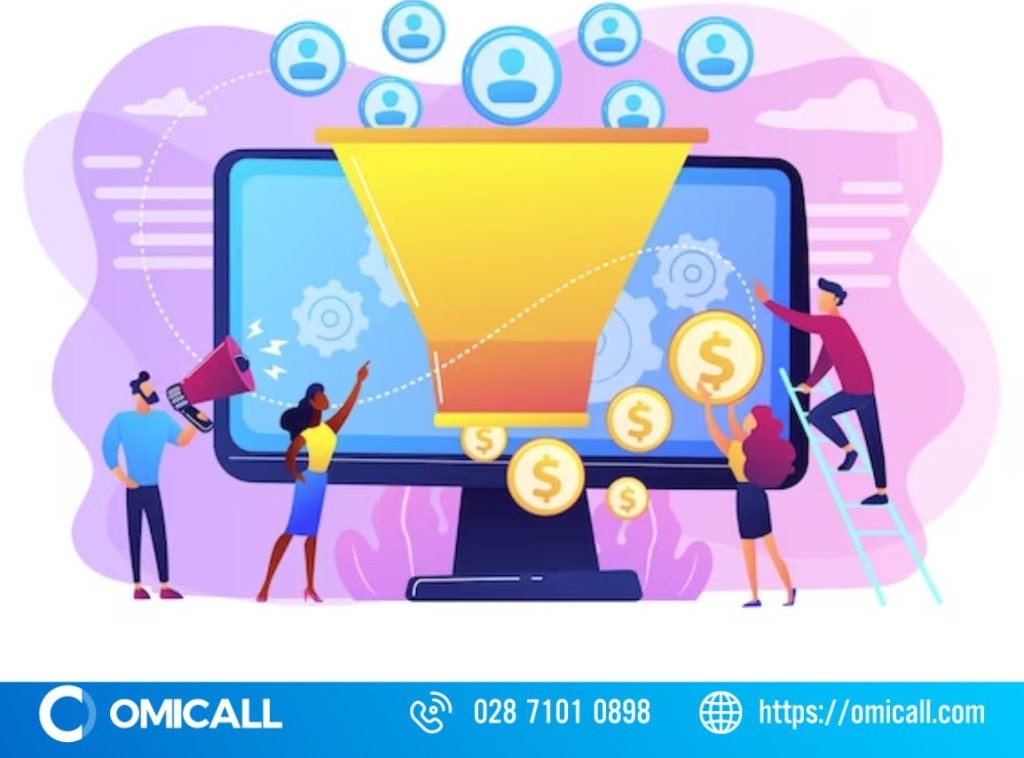
Marketing automation helps nurture and generate more potential leads.
Marketing Automation Process
When learning about Marketing Automation, businesses need to thoroughly research the Marketing Automation process to apply it most effectively. The Marketing Automation process includes the following four steps:
Step 1 – Planning: In the first step, businesses need to clearly define their goals, target audience, and the most suitable marketing messages based on information and data collected from keyword research, market surveys, or social media references, etc.
Step 2 – Lead Generation: Whenever a potential customer takes a specific action, the Marketing Automation platform will automatically activate to identify and send the company’s messages to these target customers.
Step 3 – Maintaining and Developing Leads: In this step, the Marketing Automation platform will use the behavior of potential customers to evaluate and score them, then continue to send personalized messages to them regularly. The business’s leads will be automatically maintained and developed.
Step 4 – Closing the Sale: Qualified leads will be sent to the sales team for follow-up, consultation, and closing the sale.
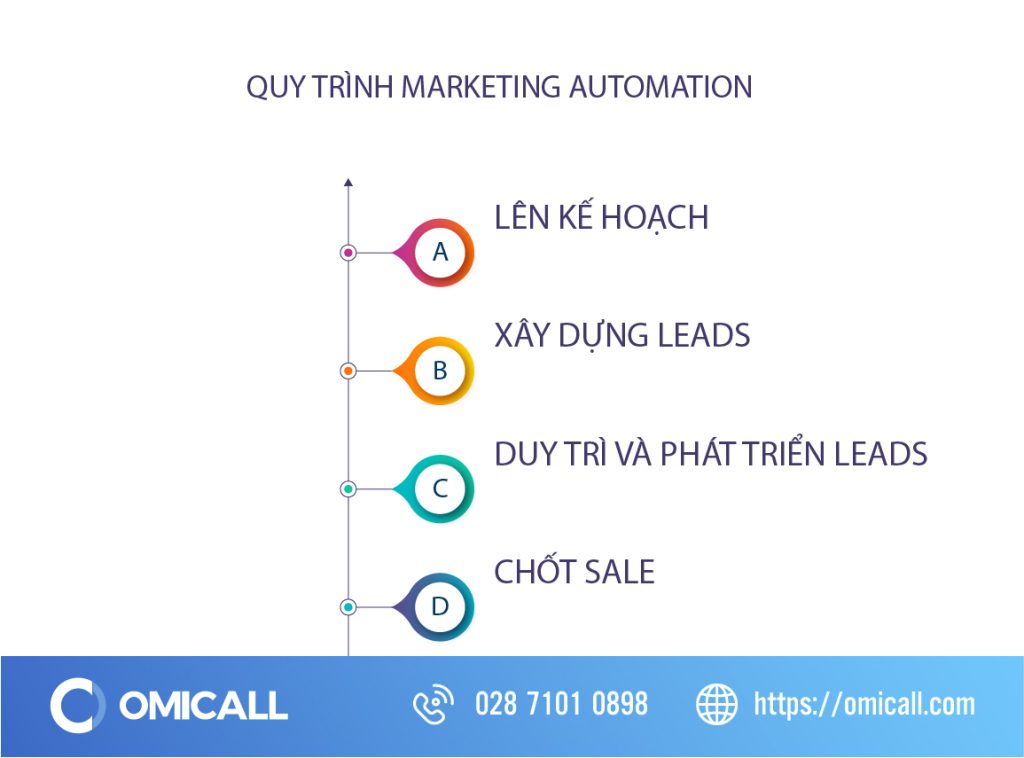
The marketing automation process involves four steps.
Benefits of using Marketing Automation
Marketing Automation for Businesses
Marketing automation should be applied to every touchpoint in the customer journey. When implemented correctly, marketing automation will bring the following benefits to businesses:
- Easily personalize the customer experience: Automated customer data will tell you what their specific needs are, making it easier to create personalized workflows. From users, workflows will gradually transform them into leads, customers, and then loyal customers.
- Optimized workflows: Tasks that used to be performed thousands of times can now be automated without manual human intervention. This significantly reduces manpower and prevents errors.
- Data integration and analytics: User data is collected and automatically stored within a single Marketing Automation system. Therefore, you can track, manage, and analyze data from different channels on a single dashboard—something difficult to achieve with manual operations or file management.
Distinguishing between B2B Marketing Automation and B2C Marketing Automation
Businesses, whether B2B or B2C, share the same goal of improving conversions and revenue. However, they still have very different approaches to achieving these goals. Furthermore, the type of messaging used will also influence their business model. Specifically:
B2B sales
B2B typically has a longer conversion cycle than B2C. They utilize marketing automation for products or services requiring a longer-term commitment. Therefore, email messaging in this format places a greater emphasis on longer-form content.
B2B has a longer conversion cycle.
In B2B, many people are involved in the decision-making process when businesses consider significant or high-value purchase deals. Therefore, it’s not just about gaining the trust of one person, but of many.
B2B businesses prioritize establishing a reputation as a trusted expert in their industry. Therefore, they need to provide more advanced information and specialized knowledge.
B2C sales
B2C businesses tend to generate sales faster, so their messaging content is much simpler.
The focus of B2C sales is building brand awareness and giving customers a reason to return. Therefore, their messages aren’t overly technical or complicated. They are primarily:
- A reminder about an abandoned shopping cart.
- Personalized product and service proposals.
- The sales pitch is tailored to different types of customers.
In conclusion
The above is a basic overview of Marketing Automation . Hopefully, you now have enough basic information about marketing automation software to simplify the marketing process for your business.
VIHAT TECHNOLOGY Co., Ltd
Headquarters: ViHAT Building – 06 Street No. 16 (Him Lam Residential Area) – Hiep Binh Chanh Ward – Thu Duc District – Ho Chi Minh City
Hanoi Branch: Floor 15, LADECO Building, 266 Doi Can, Ba Dinh, Hanoi
Cambodia Branch: Thida Rath #154 St. 33MC, Sangkat Steung Meanchey, Khan Mean Chey, Phnom Penh

-
 What is TikTok advertising? Advertising policies and how it works.
-
 Exploring Conceptual Selling – Understanding Modern Sales Trends Correctly
-
 What is a KOC? Distinguishing between KOLs and KOCs.
-
 What Are Customer Insights? Revealing How to Effectively Uncover Them
-
 What is Digital Marketing? 10 Effective Forms of Digital Marketing
-
 What is Online Marketing? Types of Online Marketing





