
10 Things Not Every Business Knows About “Call Centers”
Reading time: 7 minutes
A call center is one of the most important departments in determining a business’s results — it is the department with the best product knowledge, and serves as a critical communication bridge between the business and its customers to capture customer needs. If a business wants to optimize the effectiveness of its customer care, it should not overlook these 10 key points about “Call Centers.”
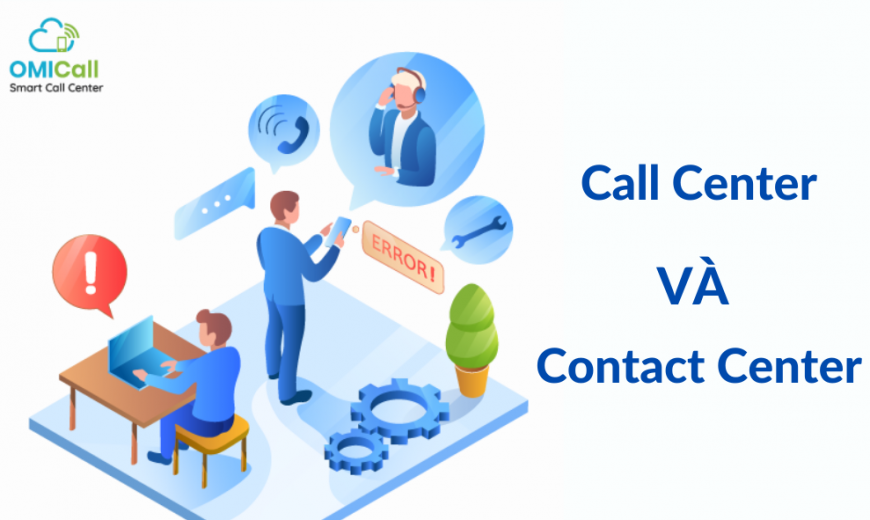
First, let’s clarify the difference between two concepts: Call Center and Contact Center.

What is a Call Center?
A Call Center is a department within a business responsible for receiving incoming calls or making outgoing calls to customers. The main functions of a Call Center are to provide customer service, handle requests, offer product information, introduce products, or conduct market research.
How are Call Centers and Contact Centers different?
The most fundamental difference between a Call Center and a Contact Center is that a Call Center only provides customer service via phone, while a Contact Center provides customer service through multiple other channels such as email, messenger, webchat, social media, video, and more. However, the terms Call Center and Contact Center can still be used interchangeably to refer to customer communication centers in general.
Call Centers are playing an increasingly important role in businesses because they enable companies to enhance their brand image and create opportunities to connect with customers, building long-term loyalty between customers and the business.
To operate a Call Center system, many advanced technologies must be applied, such as intelligent call distribution software, multichannel call routing, call recording, reporting software, integrated screen interfaces, automatic callback support, and more.
The content below will introduce you to 10 fundamental things to know when operating a Call Center.
1. People account for approximately 70% of operating costs
In a Call Center, it is people — the agents — who are responsible for directly interacting with customers, not machines or technology. Therefore, this is an extremely important component when operating a Call Center and also accounts for a significant portion of operating costs. Investing in professional and well-structured training programs for staff can deliver results beyond expectations.
2. Forecasting and resource allocation is the biggest challenge
For a Call Center, the greatest challenge for management lies in how to organize human resources. What makes management particularly difficult is the need to accurately predict and plan staffing for peak call volume periods as well as periods with little to no calls.
In the event of a forecasting error, a high volume of calls in the queue with insufficient agents to handle them will reduce customer satisfaction and place greater pressure on staff. Conversely, having too many staff on shift during periods with only a few incoming calls will drive up the cost per call (CPC).
3. Monday is the busiest working day of the week
Typically, weekends are when customers have time to review their weekly expenses and plan upcoming purchases. They then wait until Monday to start acting on those plans. To arrange staffing appropriately, Call Center managers should consider prioritizing different days of the week, weekends, and public holidays. However, forecasting call volume for accurate resource allocation should still be based on Call Center activity reports — such as the number of incoming calls per day, calls per queue, missed calls, and so on.
4. Customers tend to call between 10:00 AM and 12:00 PM more than at other times of the day
This is considered the time when people have settled their early morning tasks and find it relatively convenient to spend a few minutes handling personal matters. Therefore, staffing arrangements in a Call Center should also be flexible according to different time slots throughout the day. This is one of the reasons why the role of a call center agent is considered one of the jobs with the most shift variations in a day. However, as mentioned above, forecasting call volume for proper resource allocation should still be based on Call Center activity reports.
5. Technology supports the optimization of employee performance
There are many technologies used in a Call Center system — from intelligent call distribution software to automated voice response systems, call recording, screen recording, and many other applications — all aimed at optimizing employee performance. Therefore, when deploying software applications, businesses should thoroughly train agents on how to use the system effectively, so that all customer requests can be resolved as quickly as possible.
6. Agents are the voice and ears of the business
Agents are the employees who interact with customers most frequently in a business — their daily communication volume can even surpass that of some other departments over an entire year. As such, they are the ones who can tell you about the issues customers are facing, what customers are concerned about, the effectiveness of marketing campaigns in attracting customers, and even strategies being used by competitors.
7. Call Center managers need long-term strategic plans
The greatest challenge for Call Center managers is consistently maintaining the Service Level (SL) under very limited conditions. Spending the majority of time resolving individual customer issues in special cases, and focusing on minor details during day-to-day operations without prioritizing the development and improvement of overall work processes, can easily cause managers to gradually lose control of the Call Center.

Here is the translation:
8. Supervisors are responsible for driving Call Center operational efficiency
The role of a supervisor is extremely important in helping agents truly understand the working spirit of the customer service center and take responsibility for their work. Supervisors should be regularly present in the workplace to provide timely support to staff. In addition, training and developing the skills of agents is an indispensable part of a supervisor’s duties, as agents are the direct representatives who deliver the business’s products and services to customers.
9. Call Centers are often viewed as a Cost Center
As many as 39.8% of businesses and organizations surveyed consider a Call Center to be a Cost Center, compared to 25.2% who view it as a Profit Center. By overlooking the practical benefits that a Call Center brings, many businesses have inadvertently labeled it as a Cost Center. Viewed more accurately, a Call Center is where the voice of the customer is conveyed to the business — something that can directly and powerfully impact a company’s bottom line.
Just like the saying “Supply follows demand,” businesses must clearly understand what customers like, what they need, and what they expect before they can offer products and services that meet customer needs, driving higher revenue and profit. Naturally, the Call Center ranks among the top departments that truly understand what customers want. When its benefits are fully leveraged, a Call Center can become a “Profit Center” that delivers remarkable results.
10. A Call Center is a great working environment
With a wide range of opportunities across many companies and industries, the position of a call center agent offers a wealth of skills and experience while remaining flexible in terms of working hours. Frequent interaction with many people of different personalities also helps agents enhance their communication abilities and problem-solving skills, with faster reflexes.
Although it is just one small part of the overall organization, this position offers candidates tremendous learning opportunities. Within a compact working environment, you will be exposed to a vast range of elements: people management, technology infrastructure, operational management, corporate culture, teamwork, company policies, and work processes.
CÔNG TY TNHH CÔNG NGHỆ VIHAT (VIHAT TECHNOLOGY Co.,LTD)
Trụ sở: Tòa nhà ViHAT – 06 đường số 16 (KDC Himlam) – P.Hiệp Bình Chánh – Q.Thủ Đức – TP.HCM
Chi Nhánh Hà Nội Tầng 15, Tòa Nhà LADECO, 266 Đội Cấn, Ba Đình, Hà Nội
Chi Nhánh Cambodia Thida Rath #154 St.33MC , Sangkat Steung Meanchey, Khan Mean Chey Phnom Penh

-
 What is TikTok advertising? Advertising policies and how it works.
-
 Exploring Conceptual Selling – Understanding Modern Sales Trends Correctly
-
 What is a KOC? Distinguishing between KOLs and KOCs.
-
 What Are Customer Insights? Revealing How to Effectively Uncover Them
-
 What is Digital Marketing? 10 Effective Forms of Digital Marketing
-
 What is Online Marketing? Types of Online Marketing





