

What is an analog PBX system? Should businesses invest in using one?
Reading time: 7 minutes
What is an Analog PBX? Should businesses invest in using one?
Today’s market offers many PBX models with various operating methods across different technology platforms. This diversity aims to meet the needs of businesses, suitable for their scale and industry.
The popularity of analog PBXs is undeniable, as most businesses have used or are currently using them. This tool serves for communication, sales, and customer service via mobile devices. Have you heard of analog PBXs?
What is an Analog PBX system?
Understanding Analog Technology
Analog technology, also known as analog signals, is a type of signal that can “transform” over time. They change in similar forms, differing only in intensity during transmission. In simpler terms, this is an audio signal. Its long history has established a firm foothold in the telecommunications market, with widespread practical applications.
In the telecommunications field, analog exists in the form of electromagnetic waves. In addition, there are many other signal forms commonly used in daily life.
Analog PBX Systems
A highly successful “product” of analog technology is the creation of the PBX system. For businesses to use this system for business and communication, they must invest in hardware equipment. This is then divided into multiple extensions for different offices and departments within the company. All operations on the PBX system take place via lines running from the post office to the offices.

What is an Analog PBX? Should businesses invest in using one?
Some other applications of Analog technology in daily life:
- Controlling electrical load devices to voltage
- Temperature measuring devices
- Industrial equipment and machinery
- Advantages of Analog PBXs
Analog PBXs are one of the oldest types of PBXs, trusted by countless businesses from diverse industries. This is not surprising, as it possesses a list of outstanding advantages such as:
In terms of investment and operation:
- Internal calls are completely free. Serving the needs of inter-departmental collaboration, as most businesses now have two or more departments/divisions.
- Users can control call costs as the PBX system supports integration and setup of billing software to calculate expenses.
- Operates independently, not dependent on internet or electricity.
- Saves 5-10% on installation costs compared to IP PBX systems.
- Supports low-cost calls and receiving calls when the system integrates VoIP. This is provided the system is linked between the company’s headquarters and branches.

Advantages of Analog PBX Systems
Features
- PBX systems allow users to equip a variety of telephone devices. Each employee or department can use a separate internal telephone number.
- Custom ringtones can be set on any phone when using the PBX system.
- Internal calls are completely secure.
- Supports automatic customer greetings based on pre-set business scenarios.
- Disadvantages of Analog PBX Systems
Despite possessing many outstanding advantages, over time, certain drawbacks and disadvantages of analog PBX systems have created significant difficulties and obstacles for businesses. Especially in the era of the 4.0 revolution taking place globally, businesses have been, are, and will continue to undergo digital transformation, applying technology to their business processes to achieve the best sales results.
The emergence of smart PBX systems (virtual PBXs) has gradually gained dominance, becoming more popular and widely accepted due to their efficiency and technological optimization. Will the following drawbacks cause analog PBX systems to become obsolete and gradually forgotten?

Disadvantages of Analog PBX Systems
In terms of investment and operation:
- As a physical system, analog PBX systems are not compatible with LAN networks, requiring businesses to invest in separate, cumbersome telephone lines.
- When a business relocates its headquarters or branches, laying new lines is very complicated and difficult.
- When a business needs to expand its system, it will incur additional costs for hardware upgrades, adding more lines, and additional support cards, which is time-consuming and causes delays affecting business operations.
Costs such as periodic maintenance, repairs, and system upgrades are extremely expensive.
In terms of functionality:
- Only serves the basic needs of businesses for making and receiving calls.
- Limited functionality also creates many inconveniences during use.
- Only one call can be received at a time, leading to busy lines when customers call. Impact on the quality of customer service for businesses
- Analog PBX systems do not support APIs for integration with customer relationship management software (CRM, ERP).
- It is impossible to manage sales and telesales teams because the PBX system does not support call recording.
- It is impossible to monitor call quality, customer service performance, etc.
Different branches and departments lack clear connectivity through the PBX system.
What does an Analog PBX system include?
Input signals
When registering to set up an Analog PBX system, the post office will provide input signals to the business. Analog PBX systems operate by converting audio signals into electronic waves. When transmitted, the telephone at the other end receives electronic waves with different frequencies and amplitudes.
The PBX system uses CSN technology to transmit signals through interconnected wires, creating two-way communication.
Switching Equipment
Businesses need to accurately determine their usage needs and consider the scale of their business to decide on the appropriate number of switching devices to register. Avoid having too many or too few, as this can negatively impact business operations and increase costs.
Terminal Equipment
Terminal equipment, also known as landline phones, are connected to the PBX system to communicate with customers or receive calls. The system provider will assist businesses in running cables to the locations where the phones are installed.
How Analog PBX Works
Analog PBXs are equipped with a switch to attach to the landline phone line. When this switch is detached, the telephone line automatically connects to the system’s circuitry. When a user dials a number from an analog phone, an electronic signal is sent from the transmission unit.
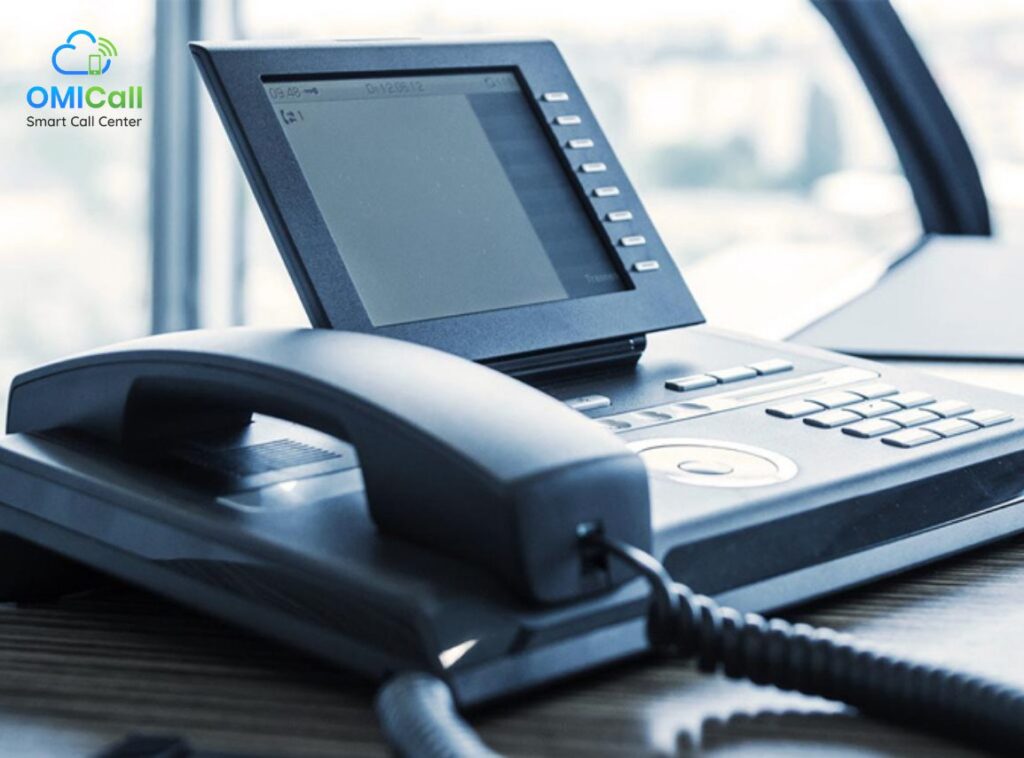
How Does an Analog Call Center Work?
Conclusion
A few years ago, analog call centers were considered indispensable tools because the needs for consultation and sales from both businesses and customers went hand in hand. However, nowadays, the need for basic communication has become commonplace. Businesses undergoing digital transformation need a more modern and multi-functional call center to serve various needs within a single management system. This will help businesses optimize business efficiency, operational productivity, and save costs.
A virtual call center is the best alternative for businesses that have, are, or intend to switch systems. Not only does it help businesses save up to 50% on costs compared to analog call centers, but a virtual call center also integrates countless smart and modern features. It optimizes time, operating costs, and business efficiency, as well as customer service.
VIHAT TECHNOLOGY Co., Ltd
Headquarters: ViHAT Building – 06 Street No. 16 (Him Lam Residential Area) – Hiep Binh Chanh Ward – Thu Duc District – Ho Chi Minh City
Hanoi Branch: Floor 15, LADECO Building, 266 Doi Can, Ba Dinh, Hanoi
Cambodia Branch: Thida Rath #154 St. 33MC, Sangkat Steung Meanchey, Khan Mean Chey, Phnom Penh

-
 What is TikTok advertising? Advertising policies and how it works.
-
 Exploring Conceptual Selling – Understanding Modern Sales Trends Correctly
-
 What is a KOC? Distinguishing between KOLs and KOCs.
-
 What Are Customer Insights? Revealing How to Effectively Uncover Them
-
 What is Digital Marketing? 10 Effective Forms of Digital Marketing
-
 What is Online Marketing? Types of Online Marketing





